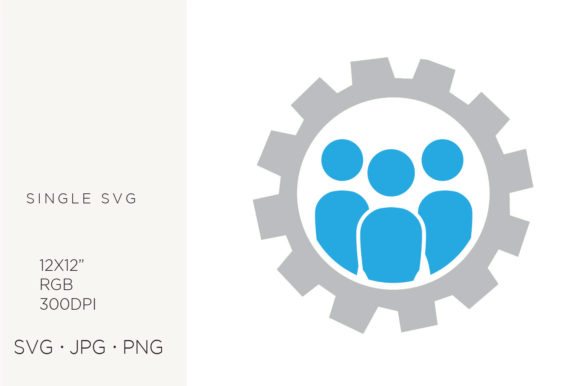
Evaluating People and Gears, Cogs SVG Assets for Design Projects
In the realm of digital design and creative crafting, the integration of human elements with mechanical motifs has become a popular visual strategy. The People and Gears, Cogs Svg collection represents a specific niche within this trend, offering vector-based graphics that merge organic human forms with industrial machinery components. For designers, crafters, and business owners, understanding the technical specifications and practical applications of these assets is essential before incorporating them into professional or personal projects. This evaluation explores the utility, benefits, and considerations associated with using these specific digital graphics.
Understanding the Technical Specifications
Before assessing the aesthetic value, it is crucial to understand the technical foundation of these files. The People and Gears, Cogs Svg assets are created using vector software, specifically Adobe Illustrator. This origin ensures that the graphics are resolution-independent, meaning they can be scaled to any size without losing clarity or becoming pixelated. The standard artboard size for these files is 12 x 12 inches, which provides a square canvas suitable for various print-on-demand platforms and cutting machines.
The resolution is specified at 300 DPI (dots per inch) in the RGB color palette. While SVGs are inherently vector-based and do not rely on DPI for screen display, the accompanying raster formats—JPG and PNG—are rendered at 300 DPI. This high resolution is critical for physical printing, ensuring that lines remain crisp and colors appear vibrant on paper, fabric, or other substrates. The inclusion of multiple file formats (SVG, JPG, PNG) enhances versatility, allowing users to choose the most appropriate format for their specific workflow, whether it involves web design, laser cutting, or traditional printing.
Primary Use Cases and Applications
The versatility of the People and Gears, Cogs Svg files makes them suitable for a wide array of applications. Understanding where these assets fit best helps creators determine if they align with their project goals.
- Logo and Brand Identity: The combination of people and gears often symbolizes teamwork, industry, engineering, or human-centric technology. Businesses in sectors such as manufacturing, tech support, or collaborative consulting may find these graphics effective for logo design or brand imagery.
- Wall Art and Home Decor: The industrial aesthetic appeals to modern and steampunk interior design styles. These vectors can be scaled up for large-format prints, canvas art, or metal wall decorations.
- Handmade Crafts and Cutting Projects: For users with vinyl cutters or laser engravers, the SVG format is ideal. The clean paths allow for precise cutting of materials like vinyl, wood, or acrylic, enabling the creation of stickers, decals, and intricate craft items.
- Stationery and Invitations: The graphics can be incorporated into wedding invitations, birthday cards, or corporate announcements, particularly for themes related to innovation, birthdays with a mechanical theme, or industrial-chic events.
- Web and Graphic Design: Web designers can utilize the SVG files for scalable icons, headers, or background elements that load quickly and remain sharp on high-resolution displays.
Benefits of Vector-Based Graphics
One of the primary advantages of choosing People and Gears, Cogs Svg over raster-only images is flexibility. Vector graphics are composed of mathematical paths rather than pixels. This allows for unlimited scalability, which is particularly beneficial for projects that require resizing, such as creating a small icon for a website and a large banner for a trade show from the same source file.
Additionally, vector files are typically smaller in file size compared to high-resolution raster images, which can improve website loading times and ease storage management. The ability to edit individual elements within the SVG file using vector editing software means that colors, shapes, and compositions can be customized to match specific brand guidelines or design preferences. This level of control is not easily achievable with static JPG or PNG files.
Considerations and Tradeoffs
While vector graphics offer significant benefits, there are tradeoffs and considerations that users must evaluate. First, working with SVG files requires compatible software. While many cutting machines accept SVGs directly, editing the vectors themselves typically requires programs like Adobe Illustrator, CorelDRAW, or free alternatives like Inkscape. Users unfamiliar with vector editing may find the learning curve steep if they wish to modify the designs extensively.
Another consideration is the complexity of the design. Intricate gear mechanisms combined with human figures can result in complex path structures. When using these files for cutting purposes, such as with vinyl or paper, excessive detail may lead to weeding difficulties or material tearing. It is advisable to test cut small sections or simplify paths if necessary for specific materials.
Furthermore, the RGB color palette mentioned in the specifications is optimized for digital screens. If the final output is intended for professional offset printing, which uses CMYK color modes, users may need to convert the colors manually to ensure accurate reproduction. Colors that appear vibrant on screen may look duller when printed if not properly managed.
When to Choose This Asset Over Alternatives
The People and Gears, Cogs Svg collection is a strong fit for projects that require a blend of human and mechanical symbolism. If your goal is to convey concepts such as collaboration, precision, engineering, or the intersection of humanity and technology, these graphics provide a ready-made visual metaphor. They are particularly useful for startups, educational materials, or hobbyist projects where custom illustration budgets are limited.
However, alternatives may be worth considering in certain scenarios. If a project requires photorealistic imagery, raster photographs or 3D renders would be more appropriate. Similarly, if the design needs to be highly unique and proprietary, relying on stock vector elements may pose branding risks, as other users may have access to the same assets. In such cases, commissioning a custom illustration might be a better investment.
For users who primarily work with raster-based software like Photoshop and do not need scalability, high-resolution PNG or JPG files might suffice. However, this limits future flexibility. If there is any possibility that the design will need to be resized significantly or adapted for different mediums, starting with the vector SVG is the prudent choice.
Practical Decision-Making Insights
To determine if People and Gears, Cogs Svg aligns with your needs, consider the following steps:
- Assess Your End Product: Will the final item be printed, cut, or displayed digitally? For cutting and large-format printing, SVG is essential. For simple web use, PNG may be sufficient, but SVG offers better quality.
- Evaluate Your Technical Skills: Do you have the software and skills to edit vector files? If not, ensure the pre-made designs meet your needs without modification.
- Check Licensing Terms: Always review the license agreement associated with the digital download. Ensure that commercial use is permitted if you plan to sell products featuring these graphics.
- Test Compatibility: Before committing to a large project, test the file with your specific hardware (e.g., vinyl cutter or printer) to ensure compatibility and desired output quality.
In conclusion, the People and Gears, Cogs Svg assets offer a versatile and professional resource for designers and makers. By understanding the technical specifications, potential applications, and inherent limitations, users can make informed decisions that enhance their creative projects while avoiding common pitfalls associated with digital graphic usage.