Evaluating Robot Arm Clipart Vector for Modern Design Workflows
In the rapidly evolving landscape of digital design, the demand for versatile, high-quality graphical assets continues to grow. Among these assets, the Robot Arm Clipart Vector has emerged as a particularly useful resource for creators seeking to blend industrial aesthetics with modern minimalism. Whether you are developing a brand identity for a tech startup, designing educational materials for STEM programs, or creating engaging social media content, having access to reliable iconography is essential. This article examines the practical value, technical specifications, and real-world applications of this specific vector asset, helping you determine if it aligns with your project requirements.
The Appeal of Minimalist Industrial Iconography
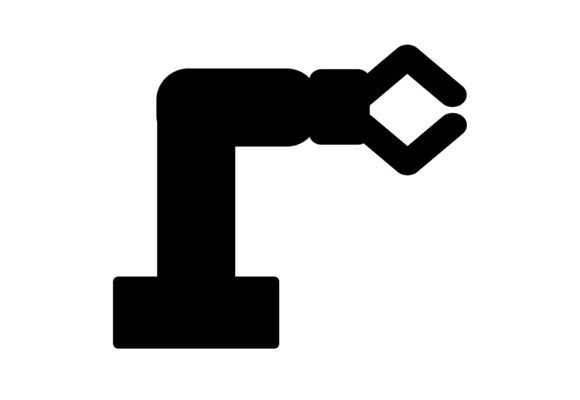
The concept behind the Robot Arm Clipart Vector is rooted in the principle of minimalist design. In an era where user interfaces are becoming increasingly clean and uncluttered, icons serve as vital visual shorthand. A robot arm, traditionally associated with manufacturing and automation, has transcended its industrial origins to become a symbol of innovation, precision, and future-forward thinking. When rendered as a minimalist vector, this imagery loses the visual noise of complex machinery and retains only the essential geometric forms that convey its meaning.
This aesthetic approach offers significant advantages for designers. First, it ensures clarity. At small sizes, such as on mobile app interfaces or favicon displays, detailed illustrations often become illegible blobs. A simplified vector symbol remains crisp and recognizable. Second, minimalism promotes versatility. Because the design avoids overly specific stylistic flourishes, it can be adapted to various brand guidelines without clashing. Whether your brand colors are vibrant and playful or muted and corporate, a simple black-or-white silhouette of a robot arm can be recolored effortlessly to match your palette.
Technical Specifications and File Versatility
One of the most critical aspects of any digital asset is its technical flexibility. The Robot Arm Clipart Vector package is designed with professional workflows in mind, offering a comprehensive suite of file formats. Understanding these formats is key to maximizing the utility of the asset.
- SVG (Scalable Vector Graphics): This is arguably the most important format for web and app development. SVGs are resolution-independent, meaning they can be scaled to any size without losing quality. They are also code-based, allowing developers to manipulate colors and shapes directly via CSS, which enhances loading speeds and interactivity.
- EPS and AI (Encapsulated PostScript and Adobe Illustrator): These are the standard formats for professional graphic design software. If you need to modify the shape of the robot arm, adjust anchor points, or integrate the icon into a larger composite illustration, these editable vector files are indispensable. They ensure that the integrity of the lines remains perfect regardless of scaling.
- PNG (Portable Network Graphics): For users who do not have access to vector editing software, the included PNG file offers a high-resolution raster alternative. With transparency support, it can be easily overlaid on photographs, presentations, or documents without a white background box interfering with the design.
- JPG (Joint Photographic Experts Group): While less flexible due to the lack of transparency, the JPG format is universally compatible and suitable for quick previews or use in systems that do not support other formats.
The inclusion of all these files in a single ZIP folder streamlines the acquisition process. You do not need to purchase separate versions for print and web; everything is provided in one convenient package. The source files are optimized at 512x512 pixels with 300 DPI for printing on paper, ensuring that even when used in physical media like brochures or business cards, the image retains sharpness and professional quality.
Practical Applications Across Industries
The utility of the Robot Arm Clipart Vector extends far beyond simple decoration. Its symbolic association with automation, technology, and efficiency makes it a strategic choice for various industries. Here is how different professionals might leverage this asset:
Tech Startups and SaaS Companies
For software-as-a-service platforms focusing on automation, AI, or logistics, this icon serves as an immediate visual cue. It can be used in hero sections of websites, feature explanation cards, or within the user interface to denote automated processes. The clean lines complement the modern, flat design trends prevalent in tech UI/UX.
Educational Content and STEM Outreach
Educators and publishers creating materials for science, technology, engineering, and mathematics (STEM) can use this clipart to illustrate concepts related to robotics, engineering, and manufacturing. Its simplicity makes it approachable for younger audiences while remaining accurate enough for older students. It works well in textbooks, worksheet headers, and presentation slides.
Marketing and Social Media
Marketers often need quick, cohesive visuals for social media posts, especially when discussing industry trends or company updates. A consistent set of minimalist icons helps maintain brand recognition. This robot arm can be used in Instagram carousels explaining technological advancements, LinkedIn banners for engineering firms, or Pinterest infographics about industrial trends.
Print Media and Packaging
Despite being a digital-first asset, the high-resolution capabilities make it suitable for print. Catalogues, brochures, and product packaging for tech accessories can benefit from the crisp edges of the vector-derived prints. The 300 DPI specification ensures that there is no pixelation when printed on standard paper stocks.
Usability and Integration Considerations
When evaluating any design resource, ease of integration is paramount. The Robot Arm Clipart Vector excels in this area due to its neutral design language. Unlike highly stylized illustrations that may require significant modification to fit a specific brand voice, this minimalist icon acts as a blank canvas. Designers can easily apply textures, gradients, or color overlays using Photoshop or other software to create a unique look that still retains the underlying structural integrity of the original vector.
However, it is important to note the limitations of minimalism. Because the design is simplified, it may not convey complex mechanical details. If your project requires a technically accurate depiction of a specific robotic model with visible joints, wiring, or hydraulic systems, this clipart may be too abstract. It is best suited for conceptual representation rather than technical documentation. Additionally, while the 512x512px base size is sufficient for most icon uses, designers working on large-format billboards should ensure they are using the vector formats (SVG, EPS, AI) to scale up appropriately, rather than relying on the raster images.
Long-Term Value for Creative Professionals
Investing in high-quality vector assets like the Robot Arm Clipart Vector offers long-term value for freelancers, agencies, and in-house design teams. Unlike trend-heavy illustrations that may look dated within a year, minimalist geometric icons tend to have a longer shelf life. They align with timeless design principles that prioritize function and clarity over fleeting stylistic quirks.
Furthermore, having a library of such assets improves workflow efficiency. Instead of spending hours creating a custom icon from scratch for every new project, designers can utilize pre-made vectors as a starting point. This allows more time to be spent on strategy, layout, and other creative aspects of the project. The consistency provided by using a cohesive set of icons also enhances the professional perception of the final output, contributing to stronger brand identity and user trust.
In conclusion, the Robot Arm Clipart Vector is a practical, versatile, and professionally viable resource for a wide range of design needs. Its combination of minimalist aesthetics, comprehensive file formats, and symbolic relevance makes it a valuable addition to any designer’s toolkit. By understanding its strengths and appropriate applications, you can effectively leverage this asset to enhance your visual communications, whether for digital platforms or print media.